banner
NEWS LETTER

最小生成树

Scroll down

最小生成树

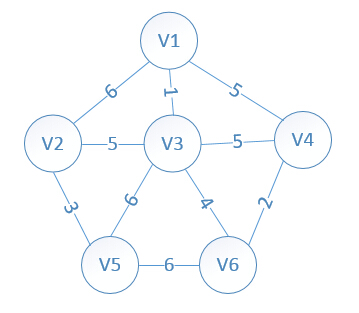
Prim 算法计算最小生成树。最小生成树的定义:最小生成树是一副连通加权无向图中一棵权值最小的生成树。假设给定无向图 G 一共有 n 个顶点,那么最小生成树一定会有 n-1 条边。

无向图

求解思想:

  1. 选定一个点做为一个集合 a,剩下的点为另一个集合 b;
  2. 将横跨两个集合且权重在其中最小的边加入最小生成树;
  3. 将刚刚加入最小生成树的边中不在集合 a 中的点加入集合 a,直到所有的点加入集合 a。

MGraph类

1
2
3
4
5
6
7
8
9
10
11
12
public class MGraph {
/*图的邻接矩阵表示*/
int nodes; //图中结点数目
char data[]; //存放结点数据
int[][] weight; //存放边

public MGraph(int ve) {
nodes = ve;
data = new char[ve];
weight = new int[ve][ve];
}
}

MinTree类

1
2
3
4
5
6
7
8
9
10
11
12
13
14
15
16
17
18
19
20
21
22
23
24
25
26
27
28
29
30
31
32
33
34
35
36
37
38
39
40
41
42
43
44
45
46
47
48
49
50
51
52
53
54
55
56
57
58
59
60
61
62
63
64
65
public class MinTree {
private static int sum = 0;//最小权值

/*创建图的邻接矩阵*/
public void CreateGraph(MGraph graph, int nodes, char data[], int[][] weight) {
int i, j;
for (i = 0; i < nodes; i++) {
graph.data[i] = data[i];
for (j = 0; j < nodes; j++) {
graph.weight[i][j] = weight[i][j];
}
}
}

public void Prim(MGraph graph, int v) {
/*graph为图的邻接矩阵表示,v为起始顶点*/
int[] visited = new int[graph.nodes]; // visited[]标记结点是否被访问过
for (int i = 0; i < graph.nodes; i++) { //初始化visited[]
visited[i] = 0;
}

visited[v] = 1;
int h1 = -1, h2 = -1; //记录边的弧尾和弧头
int wineWeight = 10000;//minWeight记录最小权重
for (int k = 1; k < graph.nodes; k++) { //nodes个顶点,最小生成树中有nodes-1条边

for (int i = 0; i < graph.nodes; i++) { //i顶点表示被访问过的顶点
for (int j = 0; j < graph.nodes; j++) { // j顶点表示未被访问过的顶点
if (visited[i] == 1 && visited[j] == 0 && graph.weight[i][j] < wineWeight) {
//寻找已访问的顶点与未访问的定点间的权值最小的边
wineWeight = graph.weight[i][j];
h1 = i;
h2 = j;
}
}
}

System.out.println(graph.data[h1] + "," + graph.data[h2]);
sum += wineWeight;
visited[h2] = 1; //标记h2被访问过
wineWeight = 10000;
}

}

public static void main(String args[]) {
char[] data = new char[]{'1', '2', '3', '4', '5', '6'};
int nodes = data.length;
int[][] weight = new int[][]{
{0, 6, 1, 5, 10000, 10000},
{6, 0, 5, 10000, 3, 10000},
{1, 5, 0, 5, 6, 4},
{5, 10000, 5, 0, 10000, 2},
{10000, 3, 6, 10000, 0, 6},
{10000, 10000, 4, 2, 6, 0}
};
System.out.println("输出:\n" + "依次构成树的边为(用两个顶点表示边):");
MGraph graph = new MGraph(nodes);//初始化邻接矩阵
MinTree mt = new MinTree();//初始化最小生成树
mt.CreateGraph(graph, nodes, data, weight);//创建邻接矩阵,graph:临界矩阵类型, nodes:节点数, data:结点名字, weight:权值
mt.Prim(graph, 0);//
System.out.print("最小权合值:" + sum);

}
}

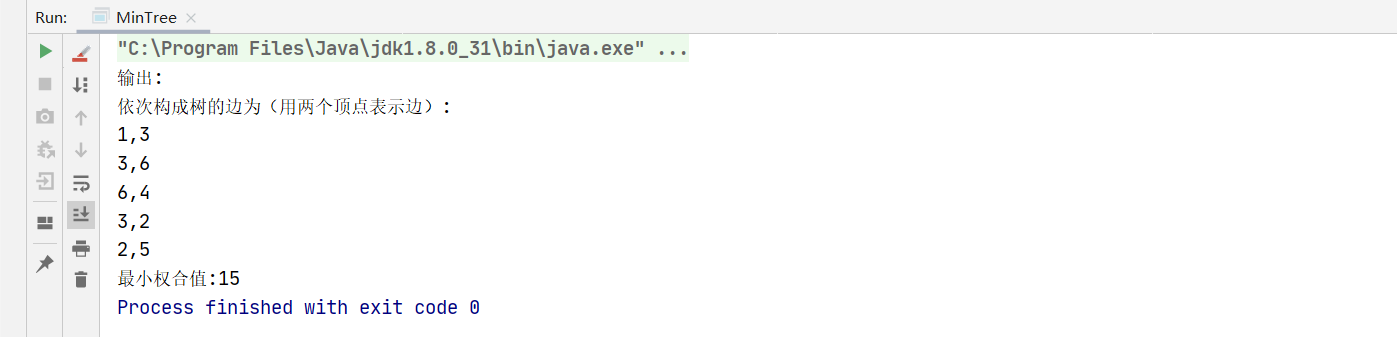
运行结果:

运行结果

参考链接1:https://blog.csdn.net/yxmmao/article/details/51586411

参考链接2:https://cloud.tencent.com/developer/article/1056927?from=information.detail%E6%9C%80%E5%B0%8F%E7%94%9F%E6%88%90%E6%A0%91%E9%97%AE%E9%A2%98prim%E7%AE%97%E6%B3%95

其他文章
cover
分支界限法
  • 25/09/27
  • 15:00
  • 1k
  • 4
cover
01背包问题
  • 25/09/27
  • 15:00
  • 752
  • 3
目录导航 置顶
  1. 1. 最小生成树
    1. 1.0.1. Prim 算法计算最小生成树。最小生成树的定义:最小生成树是一副连通加权无向图中一棵权值最小的生成树。假设给定无向图 G 一共有 n 个顶点,那么最小生成树一定会有 n-1 条边。
    2. 1.0.2. 求解思想:
    3. 1.0.3. MGraph类
    4. 1.0.4. MinTree类
    5. 1.0.5. 运行结果:
    6. 1.0.6. 参考链接1:https://blog.csdn.net/yxmmao/article/details/51586411
    7. 1.0.7. 参考链接2:https://cloud.tencent.com/developer/article/1056927?from=information.detail%E6%9C%80%E5%B0%8F%E7%94%9F%E6%88%90%E6%A0%91%E9%97%AE%E9%A2%98prim%E7%AE%97%E6%B3%95