1
2
3
4
5
6
7
8
9
10
11
12
13
14
15
16
17
18
19
20
21
22
23
24
25
26
27
28
29
30
31
32
33
34
35
36
37
38
39
40
41
42
43
44
45
46
47
48
49
50
51
52
53
54
55
56
57
58
59
60
61
62
63
64
65
66
67
68
69
70
71
72
73
74
75
76
77
78
79
80
81
82
83
84
85
86
87
88
89
90
91
92
93
94
95
96
97
98
99
100
101
102
103
|
public class Greedy {
static int N = 5, M = 1000;
static int[][] c = new int[N + 1][N + 1];
static int[] dist = new int[N + 1];
static int[] prev = new int[N + 1];
public static void main(String[] args) {
int v = 1;
init();
Dijkstra(N, 1, dist, prev, c);
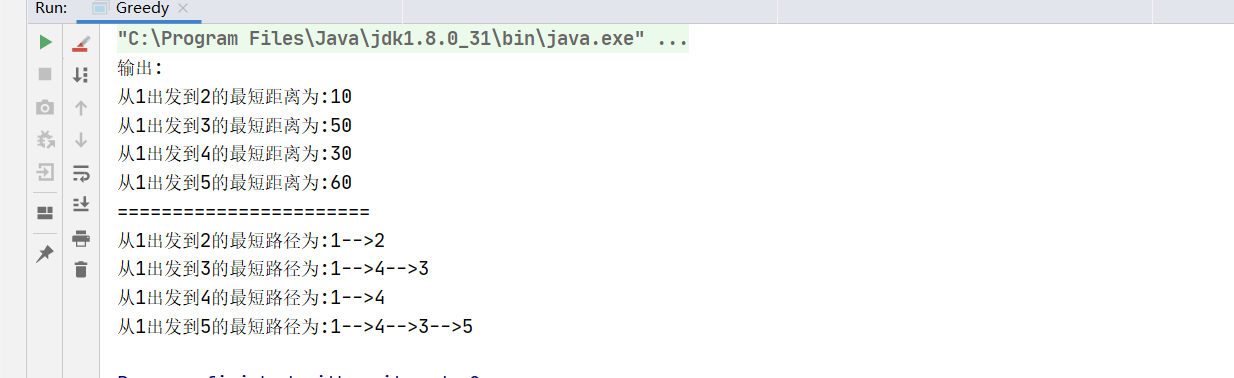
System.out.println("输出:");
for (int i = 2; i <= N; i++) {
System.out.println("从1出发到" + i + "的最短距离为:" + dist[i]);
}
System.out.println("=======================");
for (int i = 2; i <= N; i++) {
System.out.print("从1出发到" + i + "的最短路径为:");
Traceback(v, i, prev);
System.out.println(" ");
}
}
public static void Dijkstra(int n, int v, int[] dist, int[] prev, int c[][]) {
Boolean[] s = new Boolean[N + 1];
for (int i = 1; i <= n; i++) {
dist[i] = c[v][i];
s[i] = false;
if (dist[i] == M) {
prev[i] = 0;
} else {
prev[i] = v;
}
}
dist[v] = 0;
s[v] = true;
for (int i = 1; i < n; i++) {
int temp = M;
int u = v;
for (int j = 1; j <= n; j++) {
if ((!s[j]) && (dist[j] < temp)) {
u = j;
temp = dist[j];
}
}
s[u] = true;
for (int j = 1; j <= n; j++) {
if ((!s[j]) && (c[u][j] < M)) {
int newdist = dist[u] + c[u][j];
if (newdist < dist[j]) {
dist[j] = newdist;
prev[j] = u;
}
}
}
}
}
static void Traceback(int v, int i, int[] prev) {
if (v == i) {
System.out.print(i);
return;
} else {
Traceback(v, prev[i], prev);
System.out.print("-->" + i);
}
}
public static void init() {
for (int i = 1; i <= N; i++) {
dist[i] = 0;
for (int j = 1; j <= N; j++) {
c[i][j] = M;
}
}
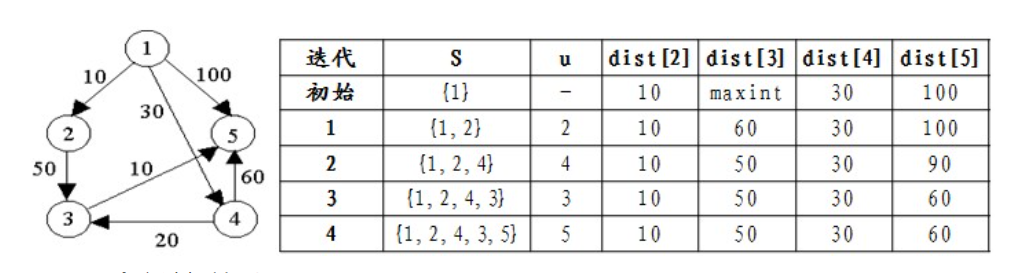
c[1][2] = 10;
c[1][4] = 30;
c[1][5] = 100;
c[2][3] = 50;
c[3][5] = 10;
c[4][5] = 60;
c[4][3] = 20;
}
}
|